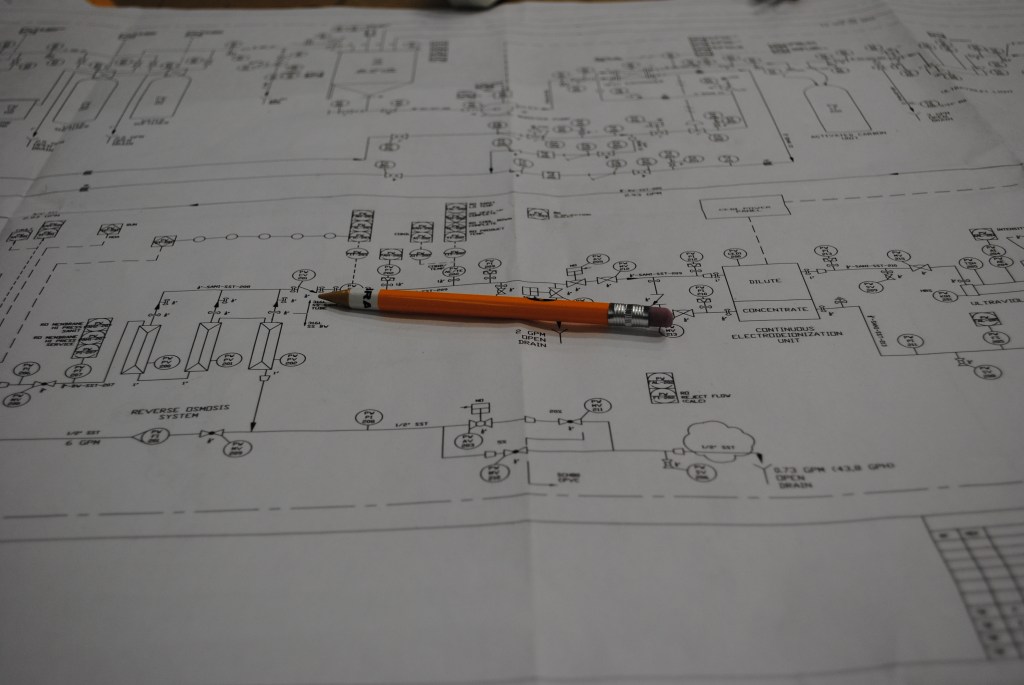
A risk-based approach to validation includes the flexibility to make continuous improvements to the design, operation, and maintenance of a pharmaceutical water system while still maintaining a controlled state. By focusing on the risk to product quality, system critical design elements are analyzed and targeted adjustments are made to optimize the process. Periodic Reviews (PRs) should be performed to assess these changes and the effect on operating data. PRs are also an opportunity to review Alert and Action Levels, preventive maintenance intervals, any out of specification data (i.e. deviations), unplanned maintenance events, and system alarms.
Holding more frequent PRs immediately after system commissioning and qualification is logical. This builds confidence in proposed operational setpoints and verifies infrequent maintenance events. PR frequencies are often relaxed as more data are acquired and analyzed, corresponding with an increased knowledge of the process. Intervals between reviews, even for mature systems, generally do not exceed 12 months.
Using a PR program, pharmaceutical water systems are able to be adjusted to account for changes to incoming feed water, seasonal or climatic variations, and current best practices with minimal risk to product water quality. A complete periodic revalidation would never be required if the system’s qualified state is not compromised. Industry guidance and regulatory documents also reason that successful PRs preclude the need for system requalification. Selected examples include:
- EudraLex Volume 4 EU Guidelines for Good Manufacturing Practice for Medicinal Products for Human and Veterinary Use Annex 15: Qualification and Validation
“Equipment, facilities, utilities and systems should be evaluated at an appropriate frequency to confirm that they remain in a state of control.
Where re-qualification is necessary and performed at a specific time period, the period should be justified and the criteria for evaluation defined. Furthermore, the possibility of small changes over time should be assessed.”
- EMA / FDA ICH Q7 Good Manufacturing Practice Guidance for Active Pharmaceutical Ingredients Guidance for Industry
“Systems and processes should be periodically evaluated to verify that they are still operating in a valid manner. Where no significant changes have been made to the system or process, and a quality review confirms that the system or process is consistently producing material meeting its specifications, there is normally no need for revalidation.”
If PRs uncover unacceptable levels of risk, a process revalidation may be warranted as suggested by the following:
- Annex 2 WHO Good Manufacturing Practices for Biological Products
“Process revalidation may be triggered by a process change as part of the change-control system. In addition, because of the variability of processes, products and methods, process revalidation may be conducted at predetermined regular intervals according to risk considerations. A detailed review of all changes, trends and deviations occurring within Annex 2 121 a defined time period – for example, 1 year, based on the regular product quality review (PQR) – may indicate a need for process revalidation.”
Certainly, there are circumstances that would require a requalification of a pharmaceutical water system including:
- Failed initial qualification
- Entirely new feed water source
- Major process change(s)
- System relocation
- System expansion or major retrofit
Less extensive modifications or continuous process improvements may be handled by change control or under a change management program, such as:
- Like for like component swaps
- Point of use additions
- Instrument or component upgrades
- Process improvements or enhancements
- Change in maintenance intervals based on operating data
- Changes in Alert and Action Levels based on operating data
Risk assessment tools may be used to determine if a complete system revalidation is required. However, if the system has been maintained in a controlled state and PRs have been performed regularly, periodic revalidation is neither required, nor expected.
 IonClear